

Kormo — Online Directory of Handymen for Residents of Dhaka
MY ROLE
Co-Founder & Lead Product Designer
TOOLS USED
THE CHALLENGE
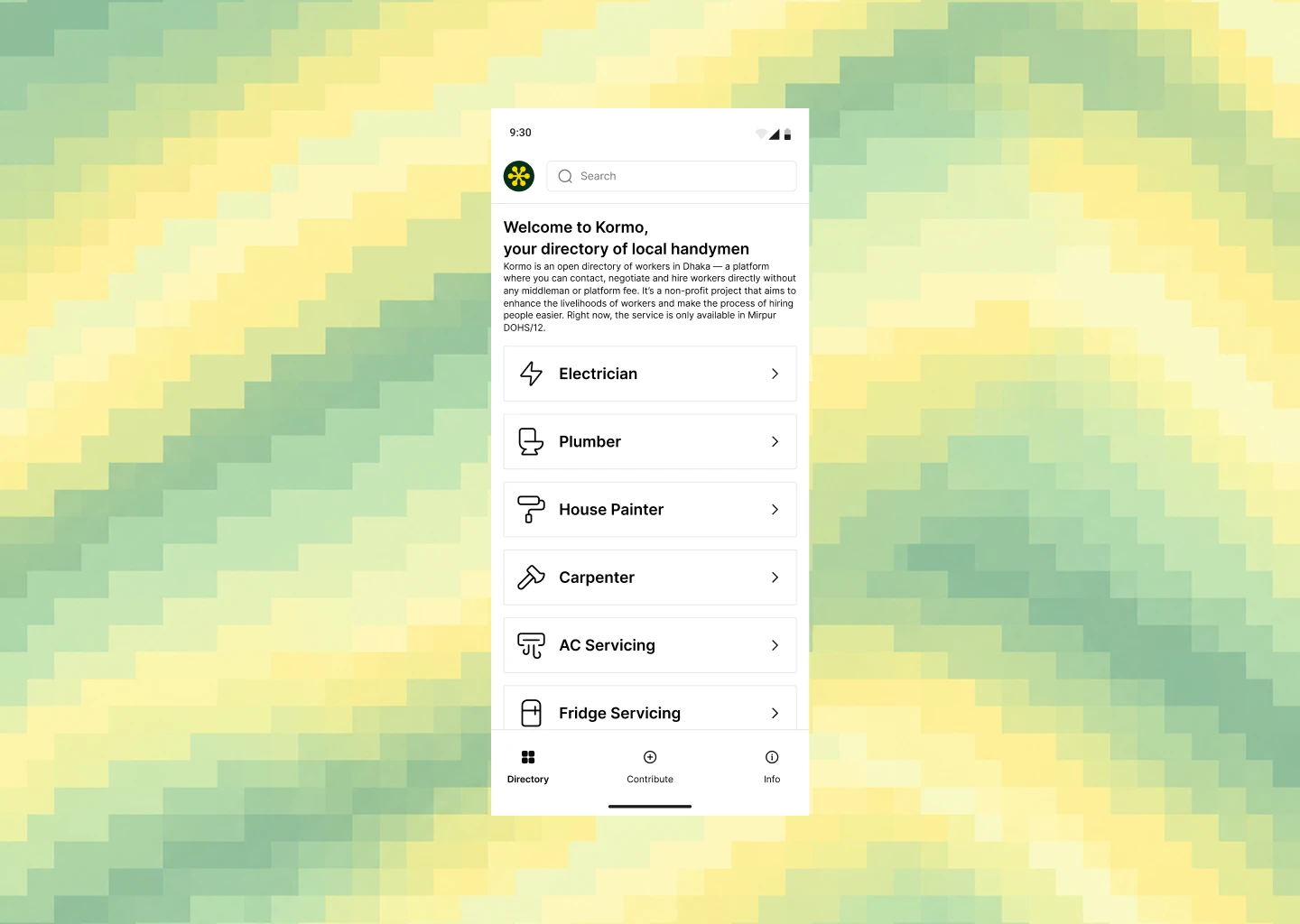
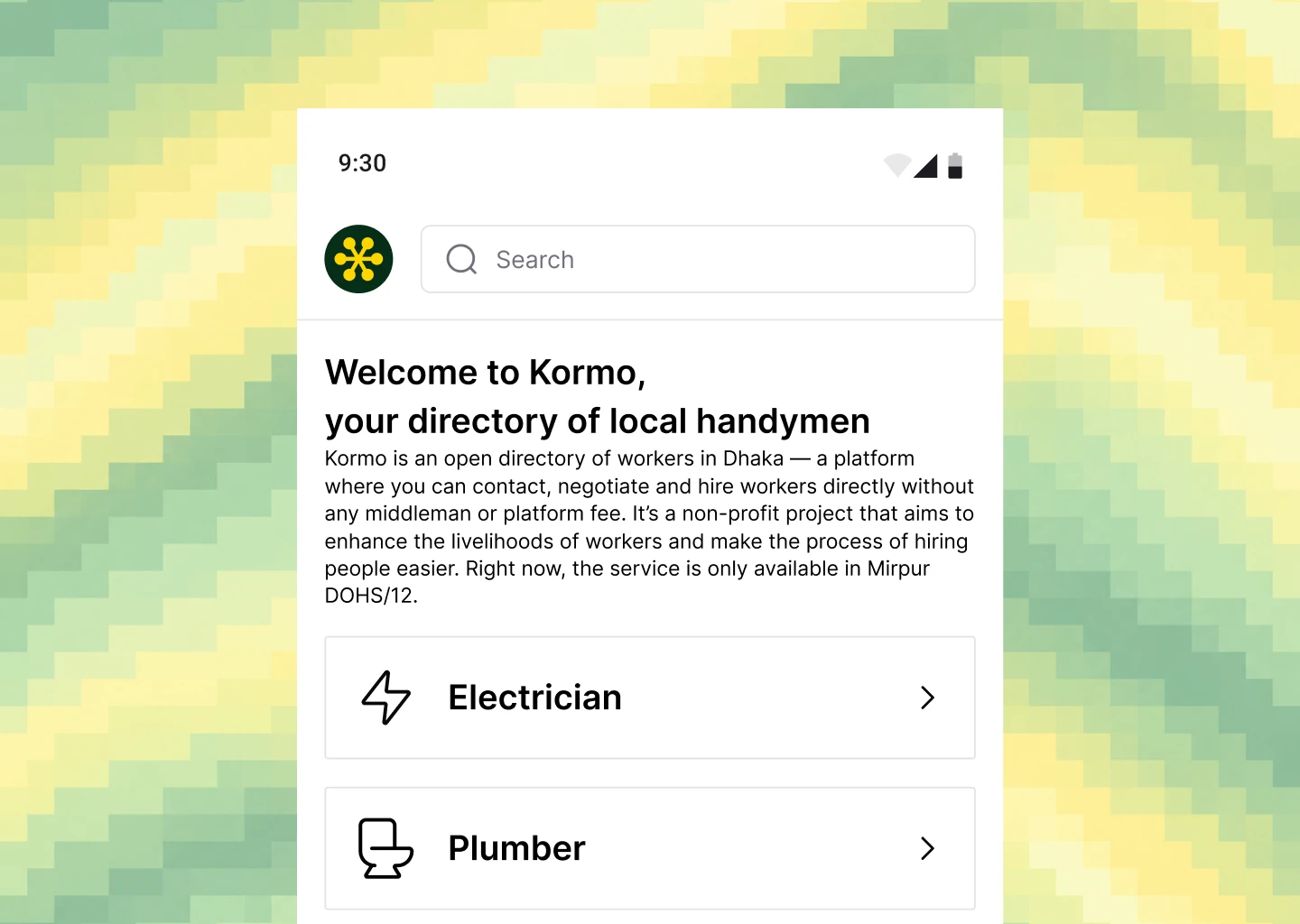
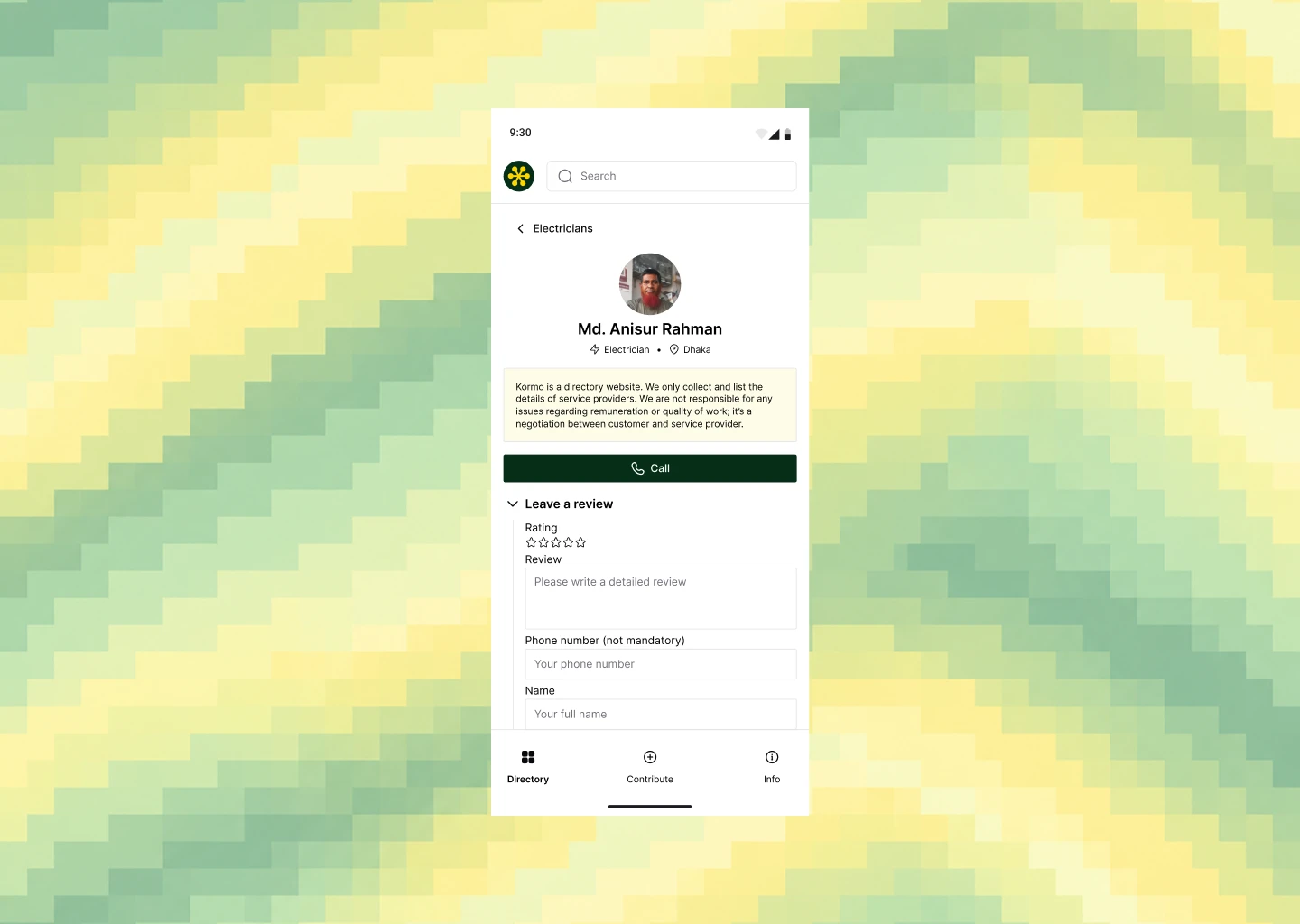
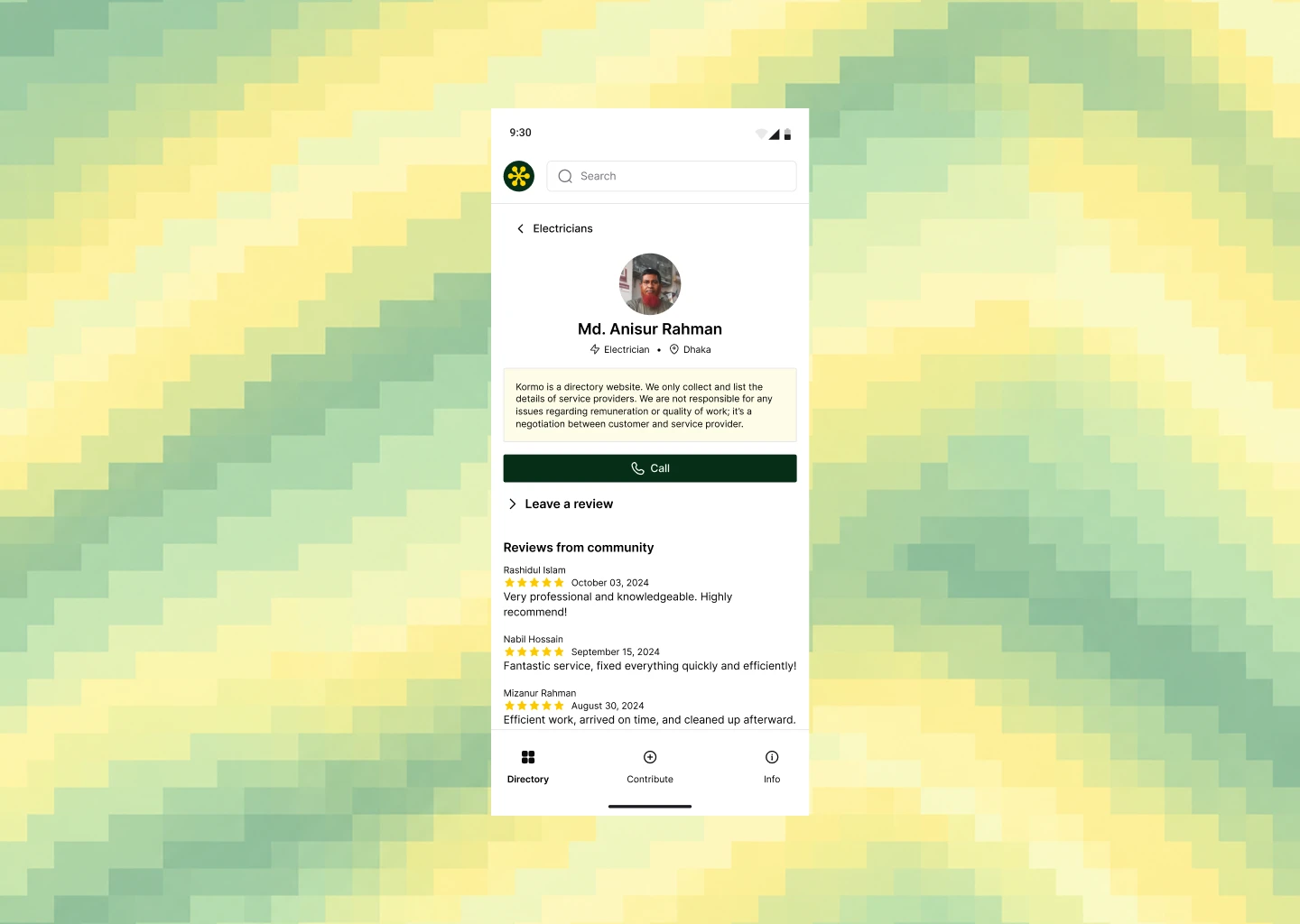
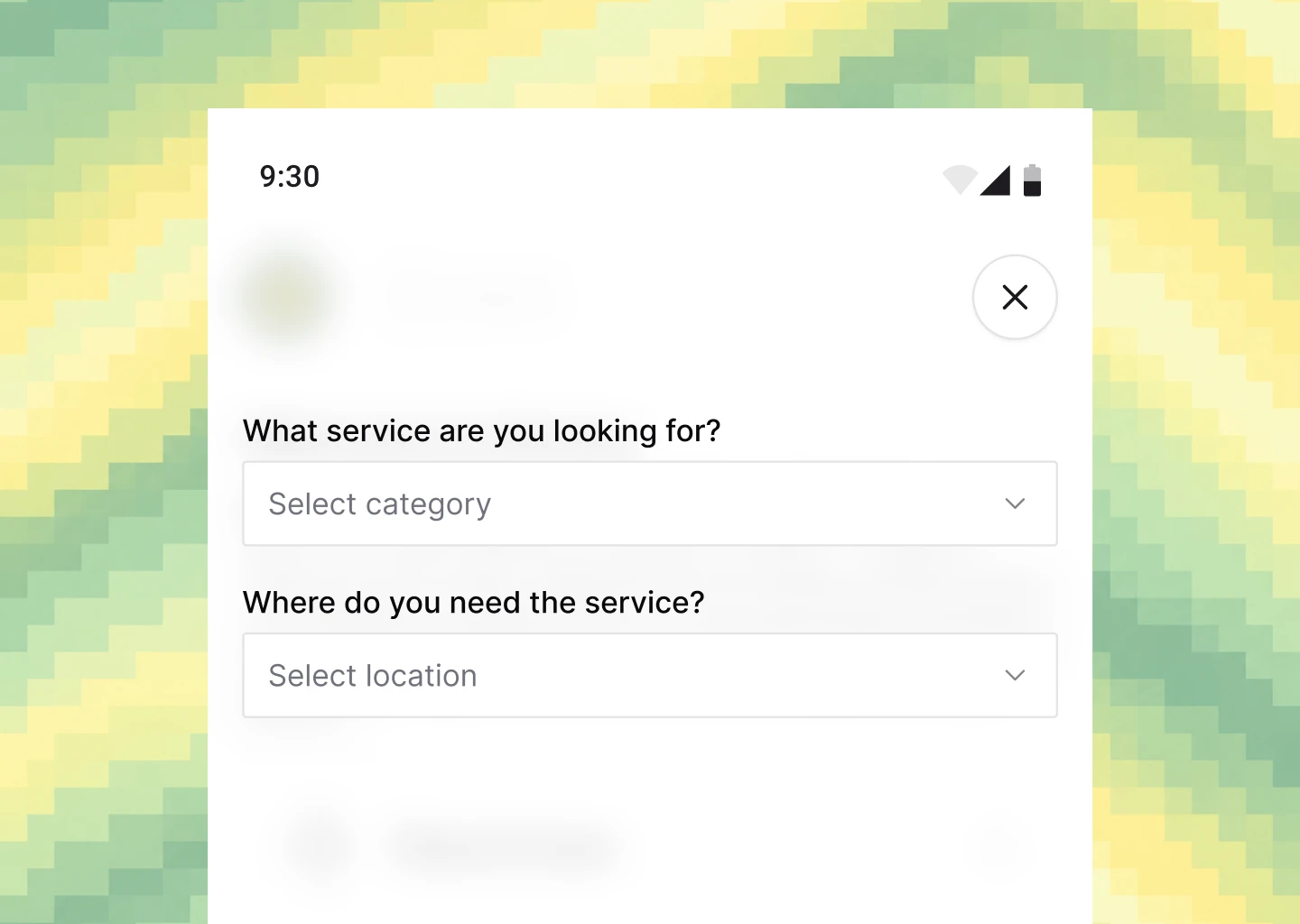
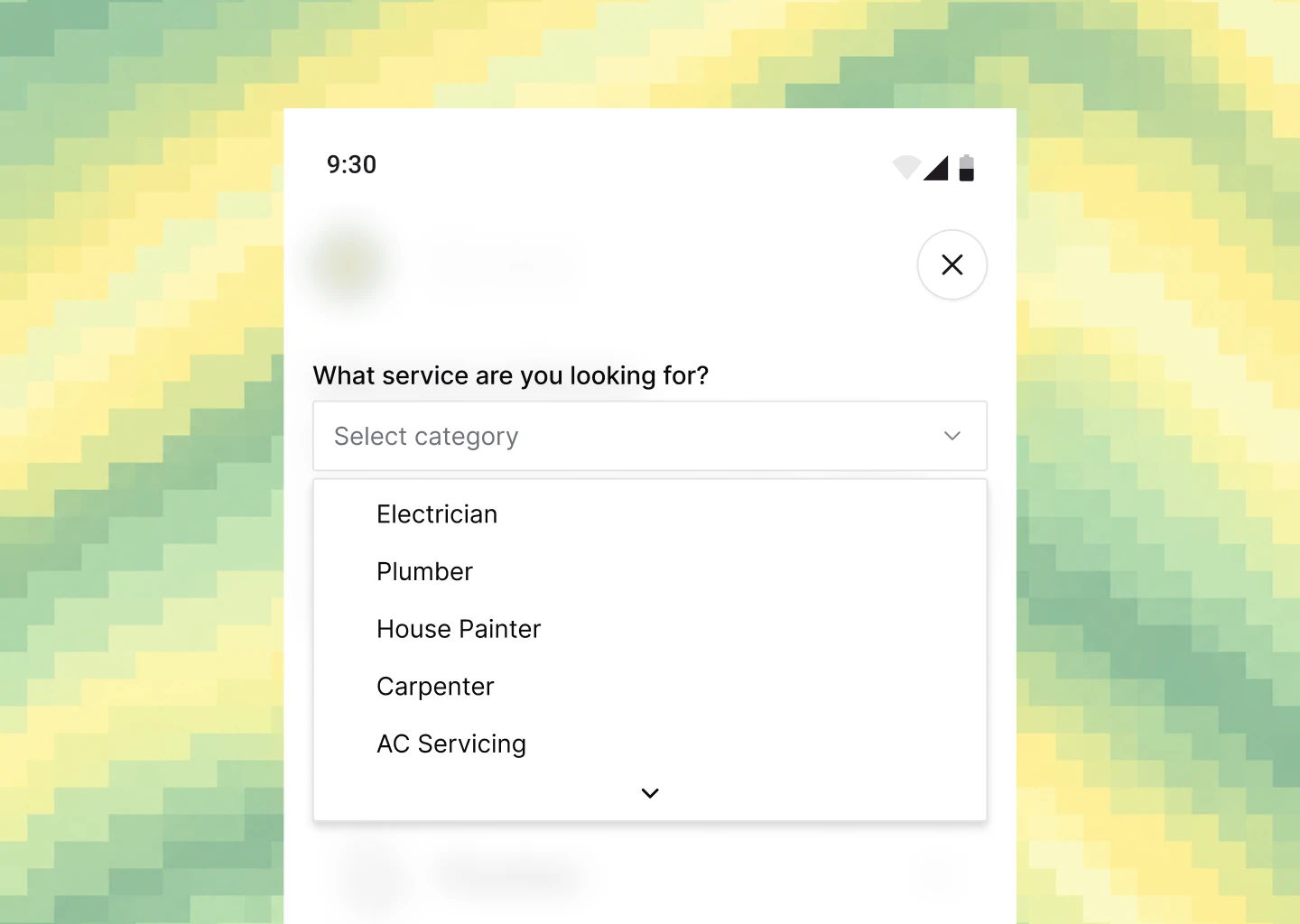
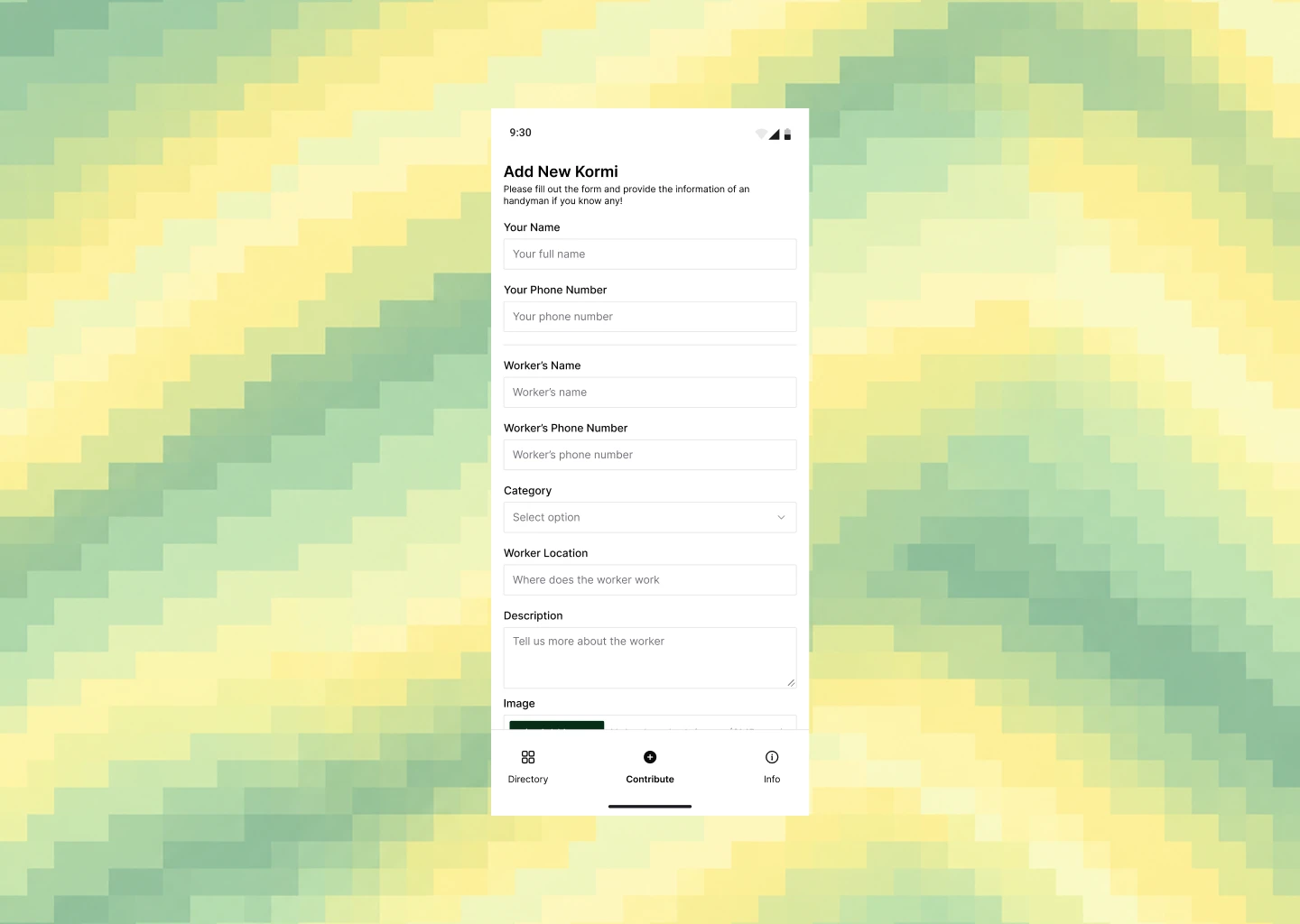
In Dhaka, a massive segment of the essential workforce—plumbers, electricians, carpenters—is digitally invisible. Because these workers often lack internet access, they cannot be found via Google or standard search engines, leaving them locked out of the digital economy. Residents are forced to rely on slow, inefficient word-of-mouth to find help. Our challenge was to bridge this extreme digital divide without requiring the workers themselves to be tech-savvy. We aimed to build a community-powered directory that "digitizes word-of-mouth," enabling residents to crowdsource and list trusted local workers, effectively giving an offline population their first discoverable footprint on the internet.
THE OUTCOME
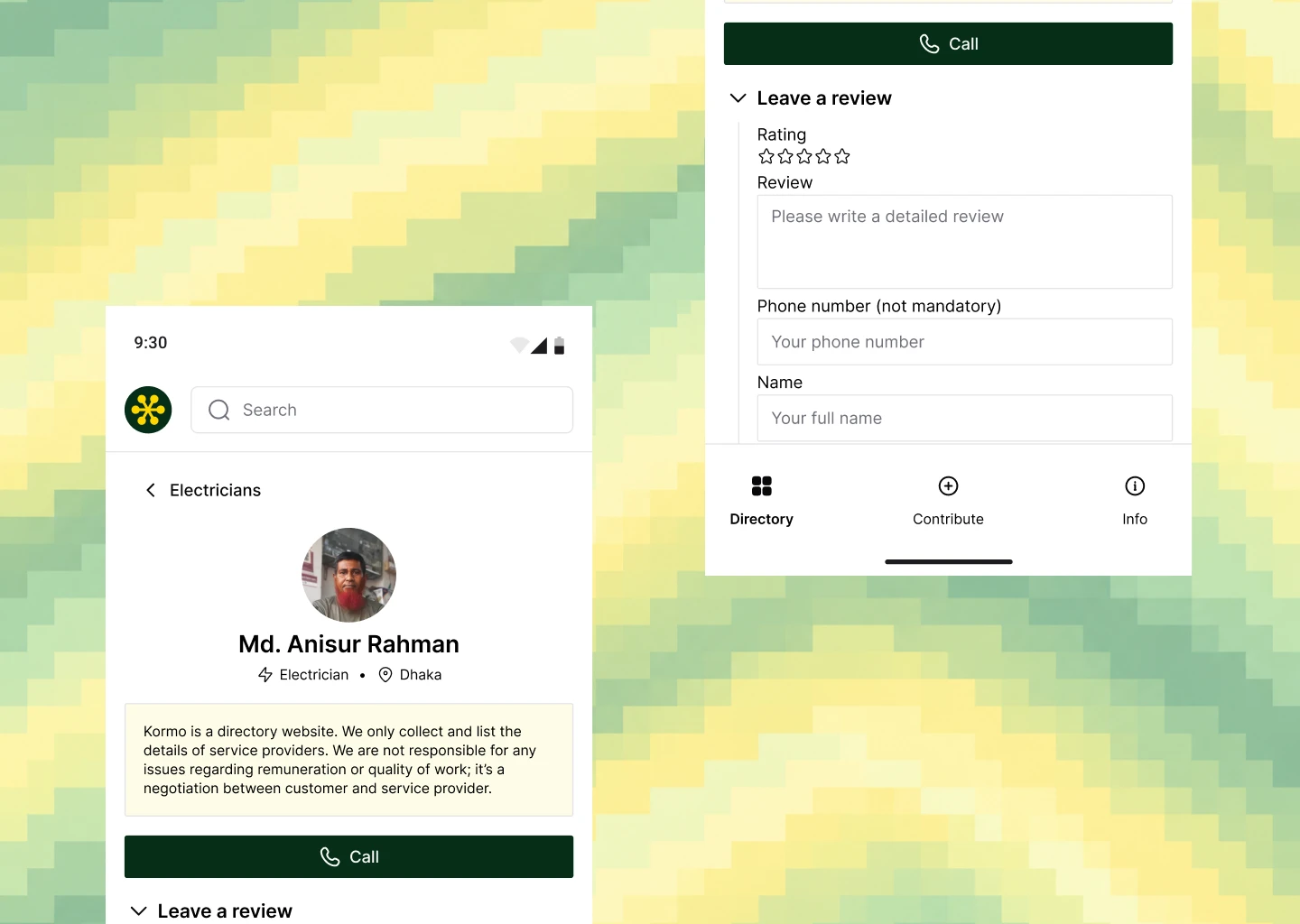
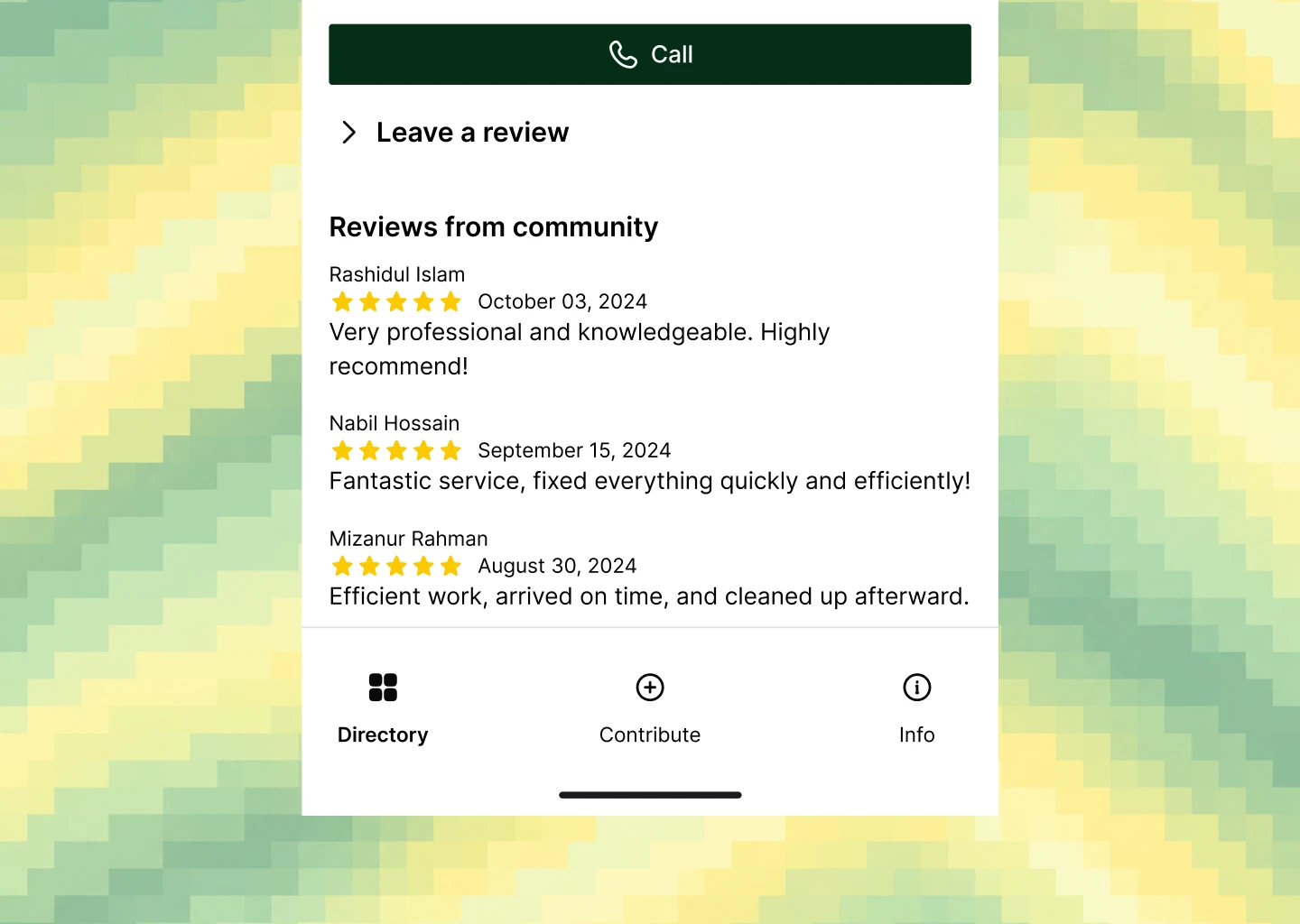
We successfully launched a live, community-powered directory that created the first-ever digital identities for 100+ local workers who previously had no online presence. By validating the crowdsourced data model, we bypassed the barrier of digital literacy, allowing the community to populate the database themselves. In the first 3 months, the platform facilitated 50+ direct connections between homeowners and workers, proving that a simple, accessible interface can effectively bridge the digital divide and formalize an invisible economy.


Kormo — Online Directory of Handymen for Residents of Dhaka
MY ROLE
Co-Founder & Lead Product Designer
TOOLS USED
THE CHALLENGE
In Dhaka, a massive segment of the essential workforce—plumbers, electricians, carpenters—is digitally invisible. Because these workers often lack internet access, they cannot be found via Google or standard search engines, leaving them locked out of the digital economy. Residents are forced to rely on slow, inefficient word-of-mouth to find help. Our challenge was to bridge this extreme digital divide without requiring the workers themselves to be tech-savvy. We aimed to build a community-powered directory that digitizes word-of-mouth, enabling residents to crowdsource and list trusted local workers, effectively giving an offline population their first discoverable footprint on the internet.
THE OUTCOME
We successfully launched a live, community-powered directory that created the first-ever digital identities for 100+ local workers who previously had no online presence. By validating the crowdsourced data model, we bypassed the barrier of digital literacy, allowing the community to populate the database themselves. In the first 3 months, the platform facilitated 50+ direct connections between homeowners and workers, proving that a simple, accessible interface can effectively bridge the digital divide and formalize an invisible economy.


